Home Texas Arizona Florida Nevada (813) 723-3209

Pool Resurfacing in Las Vegas, NV

Clark County's guide to pool resurfacing costs, surface options, and licensed contractors. Updated for 2026 with local pricing and Las Vegas-specific water chemistry data.

Get Your Free Las Vegas Quote (813) 723-3209
$4,500 to $15,000
Typical Cost, Plaster to Pebble
11,469
Est. Homes with Pools
7 Months
Pool Season Length
280 mg/L
Water Hardness (Very Hard)

Pool Resurfacing Costs in Las Vegas (2026)

Las Vegas pool resurfacing costs reflect a labor cost index of 1.15× the national average.

The ranges below are typical for an average residential pool in the Las Vegas Valley. Your quote depends on the pool's size, the finish you pick and the condition of the old surface:
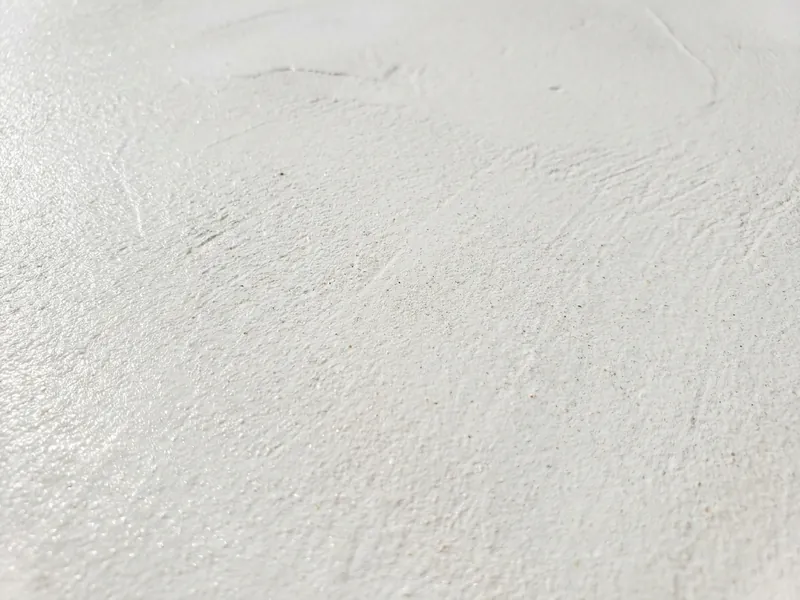
Close-up of a smooth white plaster pool finishWhite plaster
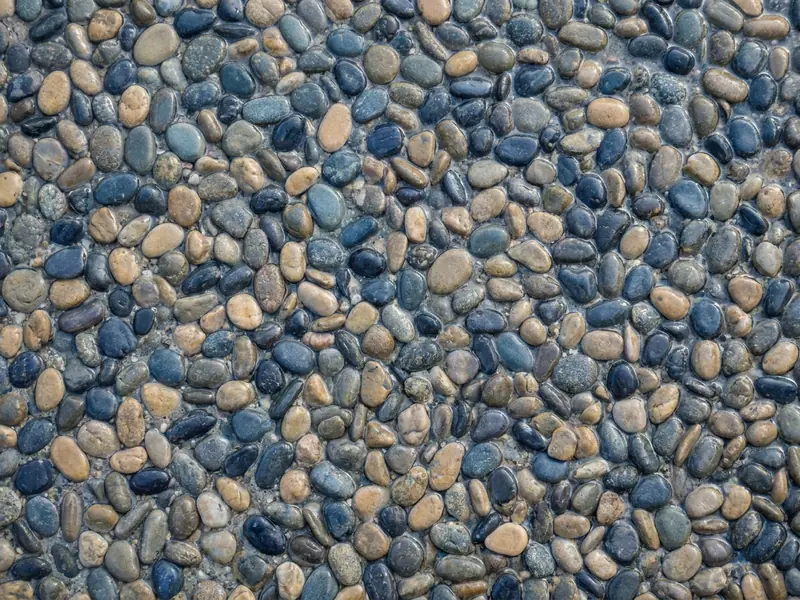
Close-up of a pebble aggregate pool finish with small rounded stones set in cementPebble aggregate
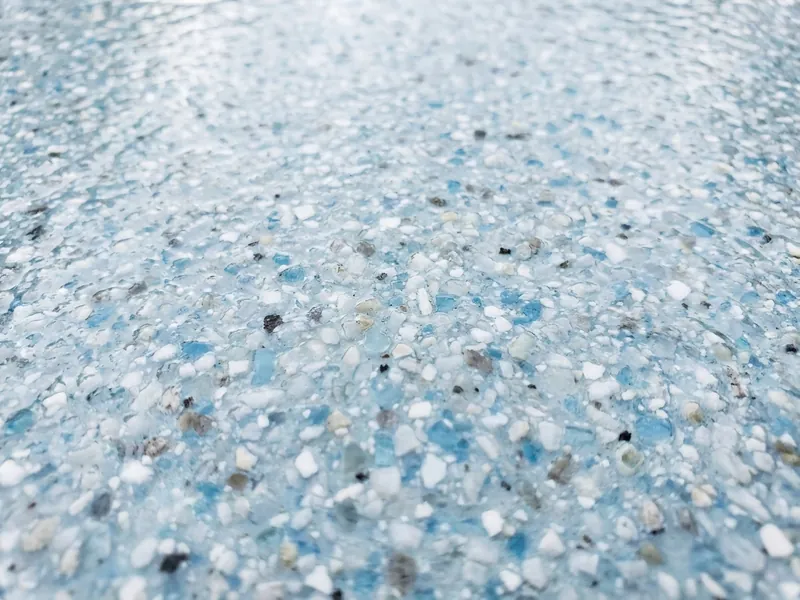
Close-up of a quartz aggregate pool finish speckled with white and blue granulesQuartz aggregate
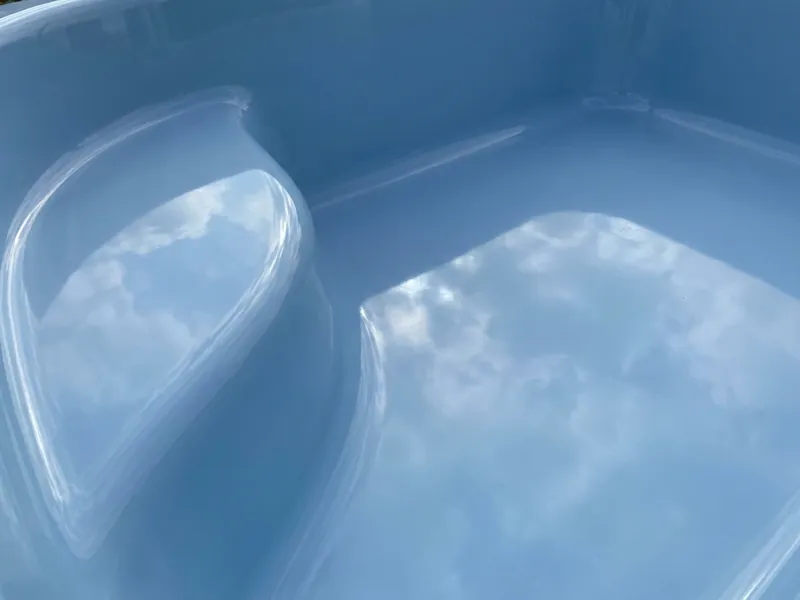
Close-up of a glossy light blue fiberglass pool surface and molded stepFiberglass
Surface Type Typical Low Typical High Life in Las Vegas Las Vegas Water Compatibility
White Plaster $4,500 $8,000 About 5 to 10 years Fair — scale staining common with 280 mg/L water
Pebble Aggregate
(Pebble Tec, StoneScapes)
$8,000 $15,000 15 to 20 years Best — most popular in Las Vegas market
Quartz Aggregate
(Diamond Brite, Hydrazzo)
$7,000 $10,000 10 to 12 years Good — smooth feel, durable in Las Vegas conditions
Fiberglass Coating $4,000 $7,200 Ask your contractor Excellent — non-porous, resists scale & etching

White plaster, quartz and pebble ranges and life spans come from prices and life spans Las Vegas Valley pool companies published for 2025 and 2026, checked against a national cost guide. Labor cost index: 1.15× national avg. Actual costs vary by pool condition, access, and contractor.
How Las Vegas's Water Affects Your Pool Surface

Lake Mead / Colorado River: Very Hard

Las Vegas's water from the Lake Mead / Colorado River measures approximately 280 mg/L (16 grains per gallon) total hardness, according to the Las Vegas Valley Water District, which is classified as "Very Hard."

Water this hard leaves calcium scale on pool surfaces, especially in summer when evaporation concentrates minerals. Keep calcium hardness at 200 to 400 ppm, balance chemistry routinely, use a calcium sequestrant and plan an acid wash every 2 to 4 years.

The water district's 2026 summary also puts total dissolved solids at an average of 591 ppm. In summer a Las Vegas pool can lose 1 to 2 inches of water a week to evaporation, and every top-up brings in more of those minerals. One Las Vegas Valley pool builder calls hard water the number one enemy of pool plaster.

Recommended surface: Pebble or quartz aggregate, which resist scale and etching better than standard white plaster

Chemistry risk: High, because scale builds quickly without regular chemical balancing

Surface Life in Las Vegas

Las Vegas's climate produces a 7-month pool season, with 8 freeze days and 138 days above 90°F. Heat and hard water shorten plaster life here, and white plaster typically lasts about 5 to 10 years, depending on care.

Best resurfacing window for Las Vegas: October–April. 8 freeze days annually — minimal winterization needed, but protect pipes during cold snaps.

Our recommendation: Pebble Tec or quartz aggregate, the finishes that stand up best to Las Vegas's very hard water and extreme UV exposure.

Las Vegas Climate & Your Pool

Las Vegas's climate produces a 7-month pool season, with 138 days above 90°F and 8 freeze days annually (2025 data). This directly affects surface longevity and maintenance schedules.

Temperature Profile (2025 Data)

Avg High
82.7°F
Avg Low
58.4°F
Days >90°F
138 days
Freeze Days
8 days
Rainfall
6.4 in/yr

Source: Open-Meteo Historical Climate Archive, 2025 calendar year.

What This Means for Resurfacing

Mild winters, with 8 freeze days annually. In this heat and hard water, white plaster typically lasts about 5 to 10 years, depending on care.

Best time to resurface: October–April, when pool usage is lowest and contractors have more availability. Cure times are more predictable in moderate temperatures.

8 freeze days annually — minimal winterization needed, but protect pipes during cold snaps.

NV Pool Contractor Licensing Requirements

Commercial and Residential Pools License (A-10)

NV requires pool resurfacing contractors to hold a Commercial and Residential Pools license (A-10) issued by the Nevada State Contractors Board, or a narrower sub-subclassification such as A-10c (Repair of Pools and Spas).

Under NAC 624.150, A-10 covers the construction, alteration and repair of pools and spas, and A-10c covers replacing plaster and coping on residential pools.

Before You Hire — Check These

  • Active contractor license number (verify online)
  • General liability insurance ($1M minimum recommended)
  • Workers' compensation coverage
  • Written warranty on surface materials (5+ years standard)
  • References from other Las Vegas pool owners
  • BBB rating and Google reviews

How to Check a Nevada License

Open the Nevada State Contractors Board license search and search by license number, company name or the name of an owner or qualified individual. Then check four things on the record:

  • The status shows Active.
  • The classification covers pools, such as A-10 or A-10c.
  • The license monetary limit is at least your contract price. The Board defines it as the largest contract a licensee may take for one client on one site.
  • The company name and license number match your quote. Nevada requires both in a licensed contractor's advertising, websites included.

Hiring a licensed contractor also matters if a job goes wrong: the Board's Residential Recovery Fund helps owners of single-family homes who hired a licensed residential contractor, suffered actual damages and used every other way to recover, and it is not open to homeowners who hired unlicensed contractors.

Las Vegas Pool Resurfacing Market Overview

Demographics (Census 2022)

  • Population: 644,835
  • Housing Units: 240,462
  • Homeownership Rate: 54.8%
  • Median Home Value: $365,300
  • Median Household Income: $66,356
  • Est. Homes with Pools: ~11,469

Source: US Census ACS 5-Year Estimates, 2022.

Competitive Landscape

Las Vegas has an estimated 42–80 pool resurfacing contractors serving the metro area. With approximately 11,469 homes with pools and an average resurfacing cycle of 12 years, the market sees roughly 956 resurfacing jobs annually.

Estimated 42–80 pool resurfacing contractors active in the Las Vegas metro area based on population model. Contractors who specialize in Las Vegas's unique water chemistry challenges (very hard water from Lake Mead / Colorado River) have a distinct advantage.

Service Areas in Las Vegas & Clark County

Licensed pool resurfacing contractors serve all neighborhoods and surrounding communities:

Henderson
Summerlin
Centennial Hills
Green Valley
Anthem
North Las Vegas
Paradise
Spring Valley
Enterprise
Boulder City
Blue Diamond
Whitney

Frequently Asked Questions — Las Vegas Pool Resurfacing

How much does pool resurfacing cost in Las Vegas?

Pool resurfacing in Las Vegas typically costs $4,500 to $15,000 depending on the finish: about $4,500 to $8,000 for white plaster, about $8,000 to $15,000 for pebble aggregate (Pebble Tec) and about $7,000 to $10,000 for quartz on an average residential pool.

How does Las Vegas's water quality affect pool surfaces?

Las Vegas's water from Lake Mead / Colorado River measures approximately 280 mg/L (16 grains per gallon) total hardness, according to the Las Vegas Valley Water District, which is classified as "Very Hard." Water this hard leaves calcium scale on pool surfaces, so keep calcium hardness at 200 to 400 ppm, balance chemistry routinely and choose a scale-resistant pebble or quartz finish.

What is the best pool surface for Las Vegas?

Pebble Tec or quartz aggregate is strongly recommended for Las Vegas's very hard water and extreme UV exposure. The city's 7-month pool season, 138 days above 90°F, and very hard water chemistry all factor into the ideal surface choice. Heat and hard water shorten plaster life here, and white plaster typically lasts about 5 to 10 years, depending on care.

When is the best time to resurface a pool in Las Vegas?

October–April is ideal. Pool usage is lowest, contractors have more availability, and temperatures provide optimal curing conditions for plaster and pebble finishes. 8 freeze days annually — minimal winterization needed, but protect pipes during cold snaps.

How does Las Vegas's extreme heat affect pool surfaces?

Las Vegas sees 138 days above 90°F annually, with summer highs regularly exceeding 110°F. This extreme heat accelerates UV degradation and creates two related problems: chlorine evaporates faster (requiring more chemicals, which wear surfaces), and heat-stressed plaster develops micro-cracks earlier. Las Vegas pool owners should use stabilized chlorine (with cyanuric acid), maintain strict pH control, and consider UV-resistant pebble or quartz finishes over bare plaster. Pool plaster in Las Vegas typically lasts about 5 to 10 years.

What license is required for pool contractors in Nevada?

Nevada requires pool and spa contractors to hold an A-10 (Commercial and Residential Pools) license issued by the Nevada State Contractors Board (NSCB), or one of its narrower sub-subclassifications such as A-10c (Repair of Pools and Spas), which covers replastering. The license requires passing the NSCB exam, carrying appropriate insurance and posting a surety bond. Nevada's licensing is straightforward compared to some states, as one classification covers both residential and commercial pool work. Verify any contractor's Nevada license at nvcontractorsboard.com before signing any contract.

How does Las Vegas hard water affect my pool?

Las Vegas draws from Lake Mead and the Colorado River, water that has traveled through thousands of miles of limestone rock. The result is very hard water at approximately 280 mg/L (16 grains per gallon). This is second only to San Antonio among major US pool markets. Calcium scale builds up rapidly on pool surfaces, particularly in the summer when heat causes rapid evaporation and mineral concentration. Las Vegas pool owners should plan for acid washing every 2–4 years and use a calcium sequestrant product year-round. Pebble and quartz finishes are strongly preferred over bare plaster in this market.

The Pool Resurfacing Process: What to Expect

Understanding the resurfacing process helps you plan your project and evaluate contractor proposals. Whether you're in Las Vegas or anywhere in the United States, the core steps are consistent — though the timeline varies based on surface type and pool condition.

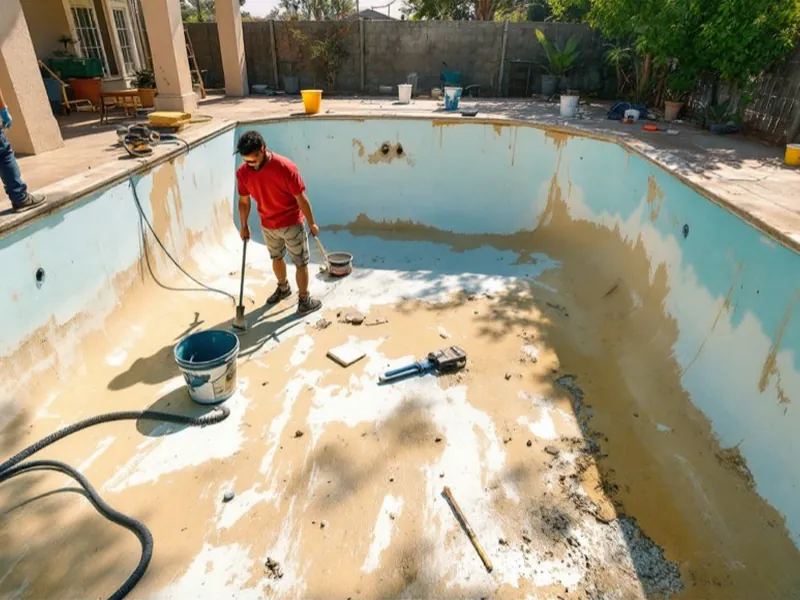
Drained pool with the old surface partly stripped during prepDrain and prep
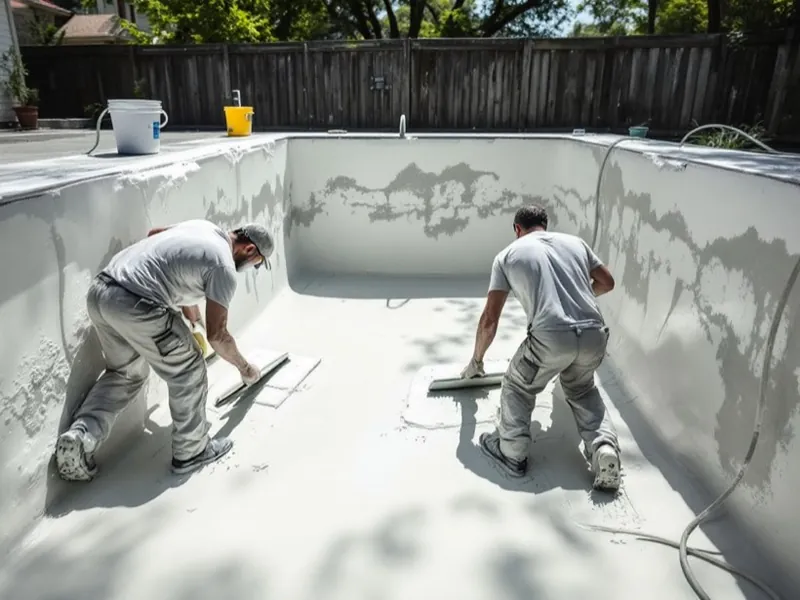
Two workers troweling new white plaster in a drained poolSurface application
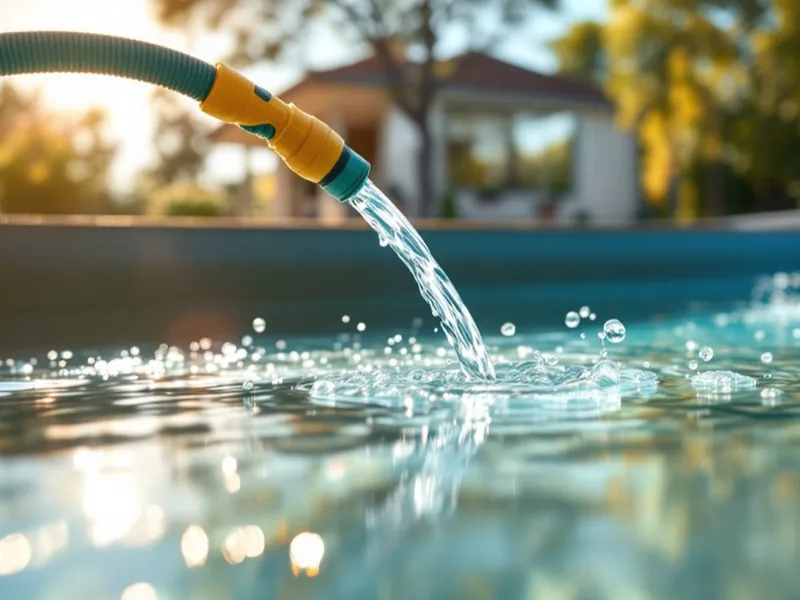
Garden hose refilling a resurfaced poolFill and start-up
1

Inspection & Assessment (Day 1)

A licensed contractor inspects the existing surface, checking for structural cracks, delamination, calcium deposits, and plumbing integrity. They'll measure the pool's square footage and test the water chemistry to identify any pre-existing imbalances. This assessment determines the scope of prep work required — a major cost variable.

2

Drain & Surface Prep (Day 1–2)

The pool is drained using submersible pumps (typically 4–8 hours for a standard pool). The old surface is chipped or blasted away using hydroblasting, acid washing, or mechanical chipping, depending on surface type and condition. Cracks are patched, the shell is inspected again, and the surface is roughened for the new finish to bond properly.

In the Las Vegas Valley, pool water drained for a resurface should go into your home's sanitary sewer cleanout, not a storm drain. Clark County says storm drains flow into Lake Mead untreated, that draining pool water into one violates Clark County Code Chapter 24.40, and that the pump or siphon should move no more than 12 to 15 gallons a minute.

3

Surface Application (Day 2–3)

New plaster, pebble, or quartz is applied by hand in multiple layers. Plaster is typically one smooth coat; pebble/quartz is a two-coat process — a bonding coat followed by the aggregate finish. Work typically takes 6–12 hours for a standard pool. The surface must be applied quickly and evenly to prevent visible seams.

4

Fill & Start-Up Chemistry (Day 3–7)

The pool is refilled (18–36 hours for a standard pool) and the contractor begins the "start-up" chemical regimen. This critical phase involves daily brushing to remove plaster dust, precise chemical balancing, and monitoring for the first 30 days. Improper start-up chemistry is the #1 cause of premature surface failure — especially in markets with hard or soft water. Your contractor should provide a written start-up protocol.

One Las Vegas Valley pool builder puts the wait before swimming at 7 to 14 days while the start-up chemistry cures the new surface, and warns that a poor start-up in the valley's hard water can leave early calcium scale on a new finish.

Questions to Ask Your Contractor Before Signing

Why Choose Our Las Vegas Contractor Network

Licensed and Bonded in Nevada: Nevada Contractor License 0089234, Class A-10, Bid Limit $125,000
$1M+ Liability Insurance
4.8+ Star Google Rating
Free Estimates, No Obligation
5-Year Surface Warranty
Clark County Specialists

Get Your Free Pool Resurfacing Quote in Las Vegas

Compare licensed, insured pool resurfacing contractors serving Las Vegas and Clark County. Free estimates with no obligation.

Call (813) 723-3209

Or fill out our form to send us your project details. Always hire a vetted, licensed contractor.

Call Now Free Estimate