Bexar County's guide to pool resurfacing costs, surface options, and licensed contractors. Updated for 2026 with local pricing and San Antonio-specific water chemistry data.
Get Free Quotes from SA Contractors 📞 (813) 723-3209San Antonio pool resurfacing costs run 8% below the national average thanks to a labor cost index of 0.92x. However, SA's extremely hard water from the Edwards Aquifer means you should factor in more frequent acid washing ($200–$400 every 3–5 years) when choosing your surface material.
The prices below are based on a typical 450 sq ft residential pool in the Bexar County area:
| Surface Type | Budget | Mid-Range | Premium | SA Water Compatibility |
|---|---|---|---|---|
| White Plaster | $3,200 | $4,500 | $6,000 | ⚠️ Fair — scale staining common with 340 mg/L water |
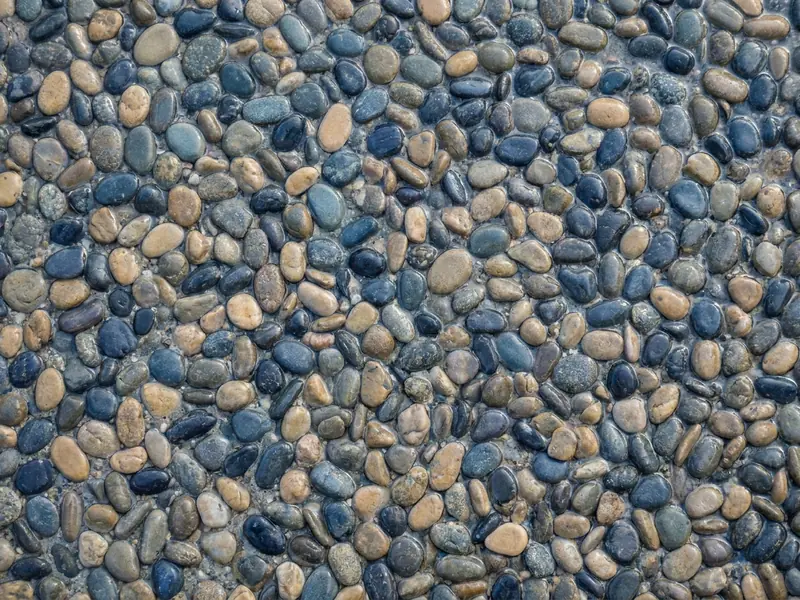
| Pebble Aggregate (Pebble Tec, StoneScapes) |
$5,500 | $7,500 | $10,500 | ✅ Good — texture hides scale; most popular in SA |
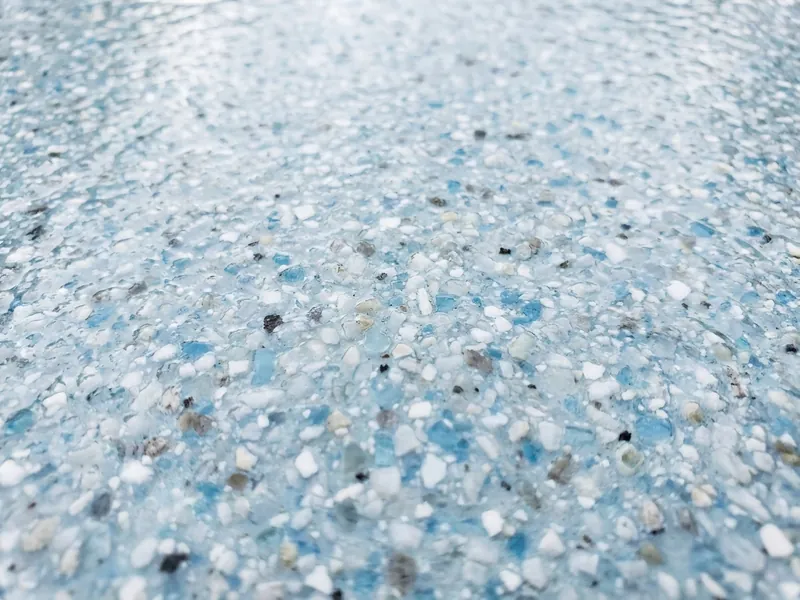
| Quartz Aggregate (Diamond Brite, Hydrazzo) |
$4,800 | $6,500 | $9,000 | ✅ Good — smoother feel, hides scale well |
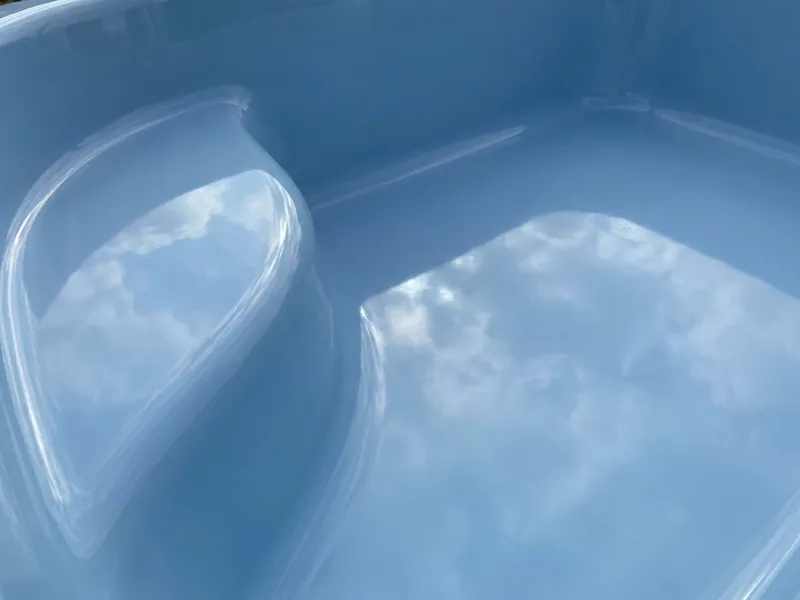
| Fiberglass Coating | $2,800 | $3,800 | $5,200 | ✅ Best — non-porous, resists scale buildup entirely |
Prices based on regional market research for Bexar County, TX (2024). Labor cost index: 0.92x national avg. Actual costs vary by pool condition, access, and contractor.
Get an instant estimate based on your pool size, surface preference, and current condition. Figures reflect San Antonio / Bexar County local pricing (2026), incorporating SA's 0.92× labor cost index and Edwards Aquifer hard-water surface considerations.
Estimates based on San Antonio regional market data (2026). Actual quotes may vary based on pool access, plumbing condition, tile work, and contractor availability. Always get 3+ quotes.
San Antonio's drinking water comes from the Edwards Aquifer, a limestone karst formation that produces water at approximately 340 mg/L calcium carbonate — classified as "Very Hard." For comparison, the national average is about 100 mg/L.
This mineral-rich water accelerates calcium carbonate scale buildup on pool surfaces, particularly on textured finishes like pebble and quartz. Pool owners should:
Unmanaged hard water can reduce pool surface lifespan by 20–30%. A plaster surface that typically lasts 10–15 years nationally may only last 8–12 years in San Antonio without proper chemistry management.
Our recommendation for San Antonio: Pebble Tec or quartz aggregate finishes. They're more resistant to calcium scale than bare plaster, and their textured appearance hides minor deposits between maintenance cycles.
San Antonio's subtropical climate means a generous 9-month pool season (March through November), but it also means intense UV exposure and heat that affects surface longevity.
Source: Open-Meteo Historical Climate Archive, 2025 calendar year.
With 134 days above 90°F, San Antonio pools face intense UV degradation. This means:
Best time to resurface: October–February, when pool usage is lowest and contractors have more availability. Cure times are also more predictable in cooler weather.
Texas law requires all pool resurfacing contractors to hold a Texas Pool and Spa Contractor License (TPCL) issued by the Texas Department of Licensing and Regulation (TDLR).
Understanding the local market helps you make informed decisions:
Source: US Census ACS 5-Year Estimates, 2022.
San Antonio has an estimated 96–180 pool resurfacing contractors serving the metro area. With approximately 16,070 homes with pools and an average resurfacing cycle of 12 years, the market sees roughly 1,339 resurfacing jobs annually.
That works out to about 7–14 jobs per contractor per year — a competitive but viable market. Contractors who specialize in San Antonio's unique hard-water challenges have a distinct advantage.
Our network of licensed contractors serves all neighborhoods and surrounding communities:
Pool resurfacing in San Antonio typically costs $4,000–$8,500 depending on surface type. Basic white plaster runs $3,200–$6,000, pebble aggregate (Pebble Tec) costs $5,500–$10,500, and quartz finishes range $4,800–$9,000. These prices assume a standard 450 sq ft residential pool.
Yes. San Antonio's Edwards Aquifer water measures approximately 340 mg/L calcium carbonate — classified as "Very Hard." This accelerates calcium scale buildup on pool surfaces. Regular acid washing every 3–5 years and using a calcium sequestrant helps manage this. Unmanaged hard water can reduce surface life by 20–30%.
Yes. Texas requires a Texas Pool and Spa Contractor License (TPCL) from the TDLR. The license requires passing an exam and posting a surety bond. Always verify your contractor's license at tdlr.texas.gov.
Given SA's 134 days above 90°F and very hard water, pebble aggregate or quartz finishes are recommended over basic plaster. They're more resistant to calcium scale and UV degradation. Fiberglass coatings offer the best scale resistance but are less common for full resurfacing.
October through February is ideal. Pool usage is lowest, contractors have more availability (often better pricing), and cooler temperatures provide more predictable cure times for plaster and pebble surfaces. Avoid resurfacing in July–August when extreme heat can cause rapid curing issues.
Understanding the resurfacing process helps you plan your project and evaluate contractor proposals. Whether you're in San Antonio or anywhere in the United States, the core steps are consistent — though the timeline varies based on surface type and pool condition.
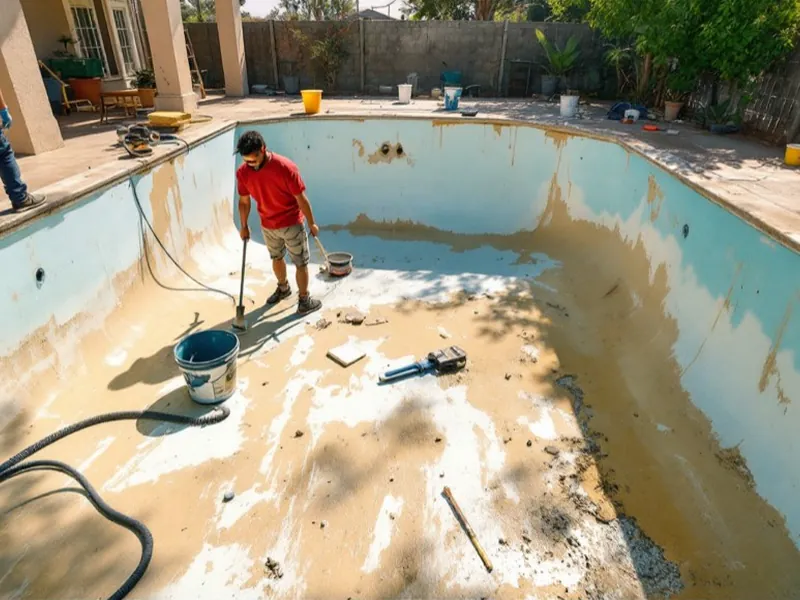
A licensed contractor inspects the existing surface, checking for structural cracks, delamination, calcium deposits, and plumbing integrity. They'll measure the pool's square footage and test the water chemistry to identify any pre-existing imbalances. This assessment determines the scope of prep work required — a major cost variable.
The pool is drained using submersible pumps (typically 4–8 hours for a standard pool). The old surface is chipped or blasted away using hydroblasting, acid washing, or mechanical chipping, depending on surface type and condition. Cracks are patched, the shell is inspected again, and the surface is roughened for the new finish to bond properly.
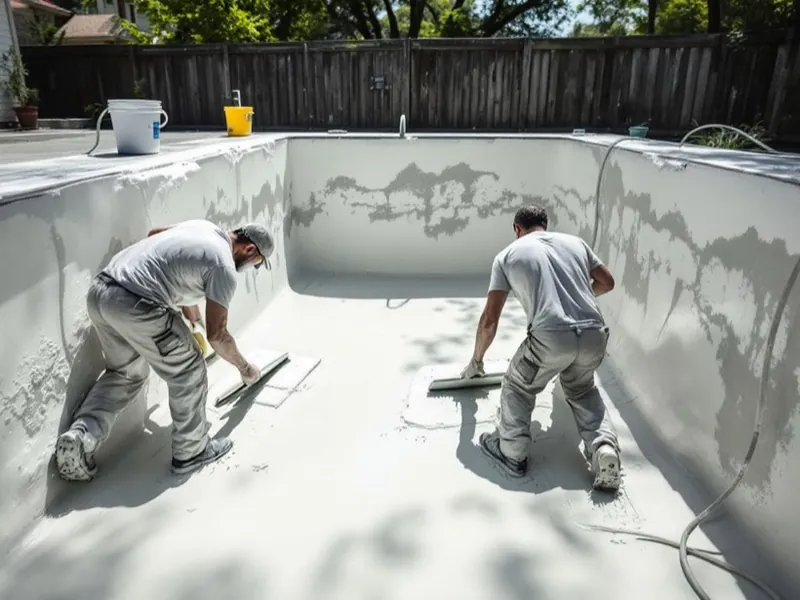
New plaster, pebble, or quartz is applied by hand in multiple layers. Plaster is typically one smooth coat; pebble/quartz is a two-coat process — a bonding coat followed by the aggregate finish. Work typically takes 6–12 hours for a standard pool. The surface must be applied quickly and evenly to prevent visible seams.
The pool is refilled (18–36 hours for a standard pool) and the contractor begins the "start-up" chemical regimen. This critical phase involves daily brushing to remove plaster dust, precise chemical balancing, and monitoring for the first 30 days. Improper start-up chemistry is the #1 cause of premature surface failure — especially in markets with hard or soft water. Your contractor should provide a written start-up protocol.
Featured San Antonio Provider
San Antonio's trusted pool resurfacing specialists serving Bexar County and surrounding areas. Plaster, pebble, and quartz finishes. Free estimates, licensed and insured.
View Alamo Pool Resurfacing → 📞 (813) 723-3209Connect with licensed, insured pool resurfacing contractors serving San Antonio and Bexar County. Free estimates with no obligation.
📞 Call (813) 723-3209Or visit alamopoolresurfacing.com for a free estimate.